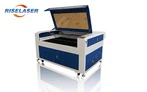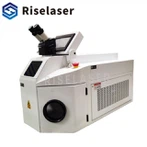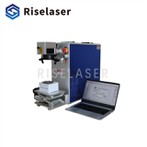
With the advancement of automation in electrical machinery, automobile, railway, shipbuilding, aerospace and other industries, laser welding technology has been applied more and more. Laser welding equipment will also develop in the direction of multi style and multi power.
At present, there are three types of lasers widely used in the market: optical fiber, pulsed nd:yag and CO2 laser sources. These three types of welding machines have gained enough development space and have been reused in high-power processing. But this is not the case for some applications, such as ultra-thin materials.
The welding of ultra-thin materials is an ultra-fine technical activity, which has high requirements for the laser beam: concentrated energy, small welding deformation and flexibility, otherwise it will produce the phenomenon of false welding or burn through. Fiber lasers have all these advantages.
The minimum spot of the focused fiber laser beam can reach 10 microns, so the solder joint is very small. And because it is a continuous wave laser, it meets the high power density required for batch and continuous welding processing. In the aerospace field with high lightweight requirements, optical fiber laser welding of lightweight material sheet has greater advantages, and has become the focus of aviation research. With the maturity of related projects and technologies, fiber lasers will be more and more widely used in welding.