
With the increasing demand for high quality and efficiency in the manufacturing industry, laser technology changes steel processing, becoming an increasingly important tool for steel cutting and shaping. Laser technology modernizes the steel industry. It has advantages over traditional flame cutting and plasma cutting. Its benefits include high precision and low heat impact.
What is laser technology?
A laser is a highly coherent, monochromatic beam of light produced by stimulated radiation.
A laser is formed when atoms or molecules are excited by external energy, such as an electric current or light. This excitation causes them to jump from a lower to a higher energy level. When they return to the lower energy level, they release photons. These photons form a high-intensity coherent beam when they resonate with each other in an optical resonant cavity.
The laser beam has three main properties:
Monochromaticity: ensures that the energy of the beam is concentrated.
Coherence: improves the stability of the beam.
Directionality: enables high-precision control of laser energy.
These properties make the laser an ideal tool for cutting and processing steel materials.
The "interaction" between lasers and steel
The application of laser technology in steel cutting relies mainly on the photothermal effect. Laser technology changes steel processing by using a high-energy laser beam to irradiate the surface of steel. Its energy is absorbed by the material and converted into heat, resulting in a sharp rise in local temperature, which leads to melting or vaporization. This highly efficient way of concentrating energy not only improves cutting accuracy but also reduces the deformation of the material when it is heated.
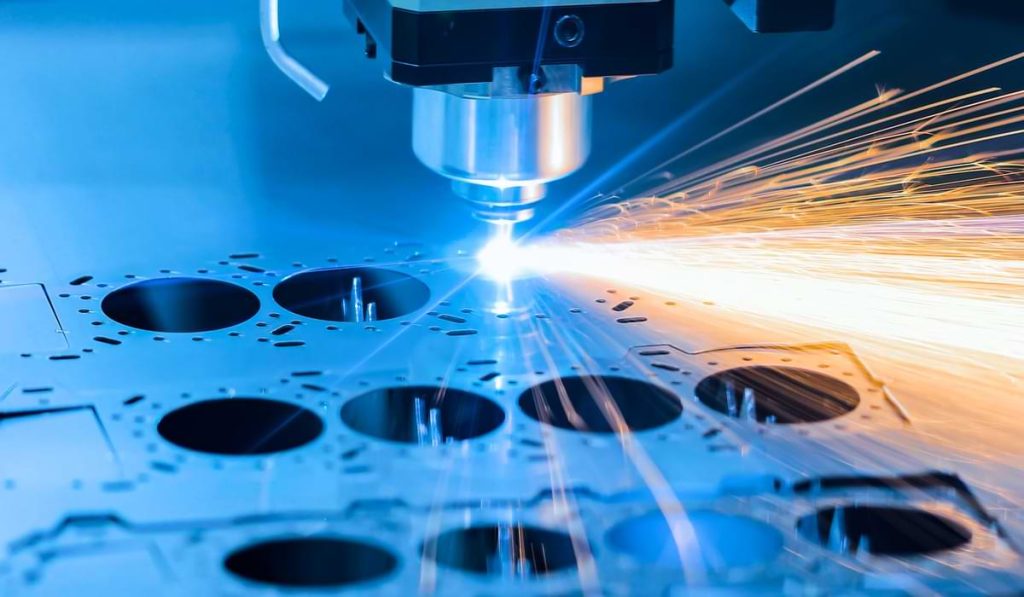
Advantages of Laser Cutting
Laser cutting works by focusing a high-energy beam. It heats the local material to a molten or vaporized state. Then, an auxiliary gas, such as oxygen or nitrogen, blows away the molten material.Compared with traditional methods, laser cutting has the following advantages:
High accuracy: the error is only ±0.2 mm, which is substantially better than the ±0.5 mm of conventional cutting methods.
Small heat-affected zone: Due to the high concentration of laser energy, the heat-affected zone is significantly reduced, from 3.5 mm to 2.0 mm.
High efficiency: cutting speeds are increased by 33%, enabling faster completion of high-volume production tasks.
In automotive manufacturing, for example, high-strength steel plates need to be cut precisely in order to maintain the mechanical properties of the material. Laser cutting not only achieves this, but also increases efficiency by optimizing parameters such as power density and cutting paths.
Laser welding: the art of joining
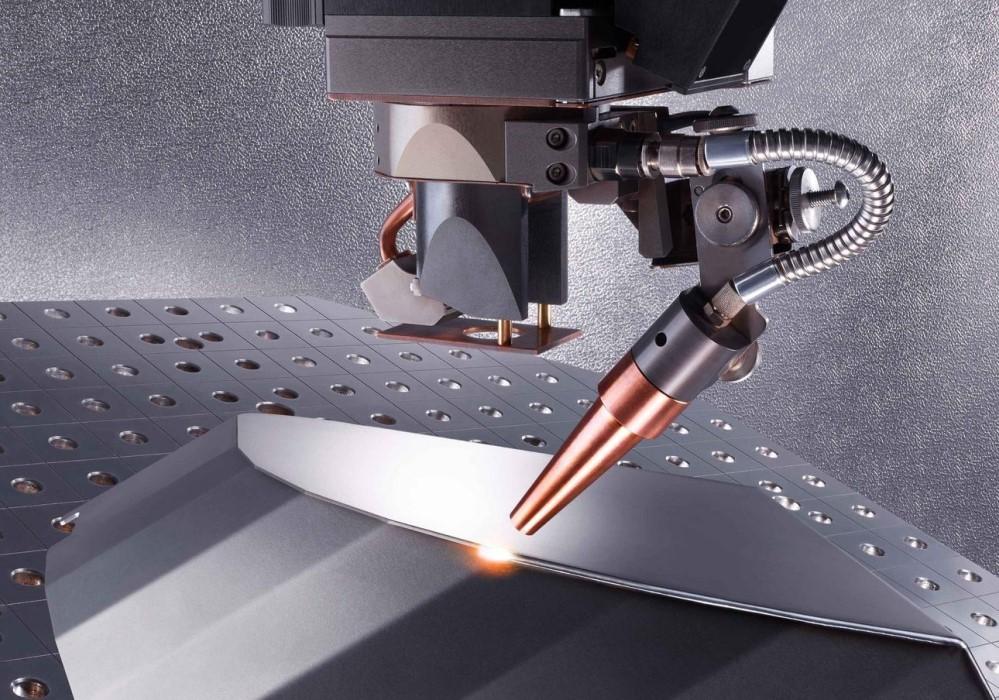
Laser welding utilizes the high energy density of a laser beam to rapidly heat the material to a molten state, thus enabling joining. Laser welding offers the following significant advantages over conventional welding:
Deep penetration welding: Increases the depth of the weld and improves the strength of the joint.
Fast speed: welding speed is faster than traditional welding methods.
Small heat-affected zone: reduces thermal deformation and residual stress.
This technology is widely used in fields such as aerospace and shipbuilding. In thick steel plate welding, the strength of the weld can be significantly improved by precisely controlling the laser power and welding speed. For example, a shipbuilder has increased weld strength from 450 MPa to 540 MPa using laser welding technology, and has also significantly reduced heat distortion.
Laser Surface Treatment: Enhancing Steel Properties
Laser surface treatment technologies, including laser hardening and laser cladding, are primarily used to improve the surface properties of steel materials. Laser hardening increases the surface hardness of a material through rapid heating and cooling, while laser cladding extends the service life of steel by adding a wear and corrosion-resistant coating to the surface of the material.
For example, by adjusting the laser power and scanning speed, a manufacturing plant increased the surface hardness of steel plates by 15%, significantly enhancing the material's wear and corrosion resistance. This technology is particularly suitable for fields such as mechanical engineering and mold processing.
Laser Additive Manufacturing: The Future of Manufacturing
Laser Additive Manufacturing (i.e. 3D printing technology) is an advanced process for building complex parts by stacking materials layer by layer. A laser beam is used as a heat source to melt metal powder and gradually solidify it into shape. This technology shows great potential in the manufacture of precision parts and is particularly suitable for aerospace and complex industrial equipment.
Case Study: Breakthrough in Shipbuilding
After adopting laser cutting and welding technology, a shipbuilding factory solved the problems of thermal deformation and lack of strength in thick steel plates. This also significantly improved production efficiency. In cutting 30 mm thick steel plates, the laser cutting speed reached 2 m/min, marking a 33% improvement over traditional methods. For welding, by adjusting the laser power and speed, a weld depth of 6 mm was achieved. This adjustment also improved the quality of the weld seam. These technical improvements have resulted in a stronger hull structure and a significant increase in product competitiveness.
Summarize and Prospect
Laser technology has revolutionized the steel processing field with its high precision, high efficiency, and low heat impact. Laser technology changes steel processing by enhancing quality and efficiency in various applications, ranging from cutting and welding to surface treatment and additive manufacturing. This technology is advancing rapidly. It will become increasingly vital in the steel industry. This will drive innovation and propel the manufacturing sector to new heights.


