As one of the major inventions of the 20th century, laser technology is known for its "fastest knife", "most accurate ruler", and "brightest light". Today, this technology is widely used in all areas of the national economy, including communications, medicine, and manufacturing. Specifically, the introduction of laser technology is driving significant changes in the tire industry, promoting an overall upgrade of product quality and the manufacturing process.
Evolution of tire manufacturing and technology needs
Tire manufacturing has undergone a long evolution from solid rubber tires to modern radial tires. The automotive industry is rapidly expanding, creating increasingly stringent demands for tire performance, durability, and productivity. As a result, manufacturing technologies are continuously evolving to meet these challenges. Concurrently, there is a surge in consumer interest for innovative tire designs, including quiet, self-repairing, and smart tires. This growing market demand opens up vast opportunities for the application of laser technology, which can enhance tire manufacturing processes and product features.
Unique advantages of laser technology
With its high monochromaticity, high coherence, high directionality and high intensity, laser technology has become an important tool in the tire manufacturing industry. It can realize non-contact, high-precision processing and inspection, effectively improve product quality, reduce manufacturing costs, and accelerate industrial upgrading. According to relevant statistics, as of 2023, the number of patent applications for laser technology in the tire industry has exceeded 900, and the annual growth trend reflects the gradual popularization and in-depth application of the technology.
Core applications of laser technology in the tire industry
1. Laser measurement
Laser measurement is the most widely used technology in the tire industry, accounting for more than 40% of overall applications. Its non-contact nature makes it particularly useful for geometric inspection, tread pattern measurement and embryo molding monitoring. For example, laser technology can be used to check tire roundness and dynamic balance data in real time on the production line to ensure that the product meets specifications, as well as to assess tire wear by measuring tread pattern depth.
2. Laser cleaning
The traditional cleaning process on the tire mold damage, while high energy consumption and serious pollution. Laser cleaning technology with its no consumables, pollution-free, high-efficiency features become a model of green cleaning. Through the laser, can efficiently remove the mold surface dirt and residue, and does not damage the mold surface. In addition, laser cleaning is also applied to the inner wall treatment of tires to provide an ideal surface for attaching sensing elements or explosion-proof rubber.
3. Laser coding and engraving
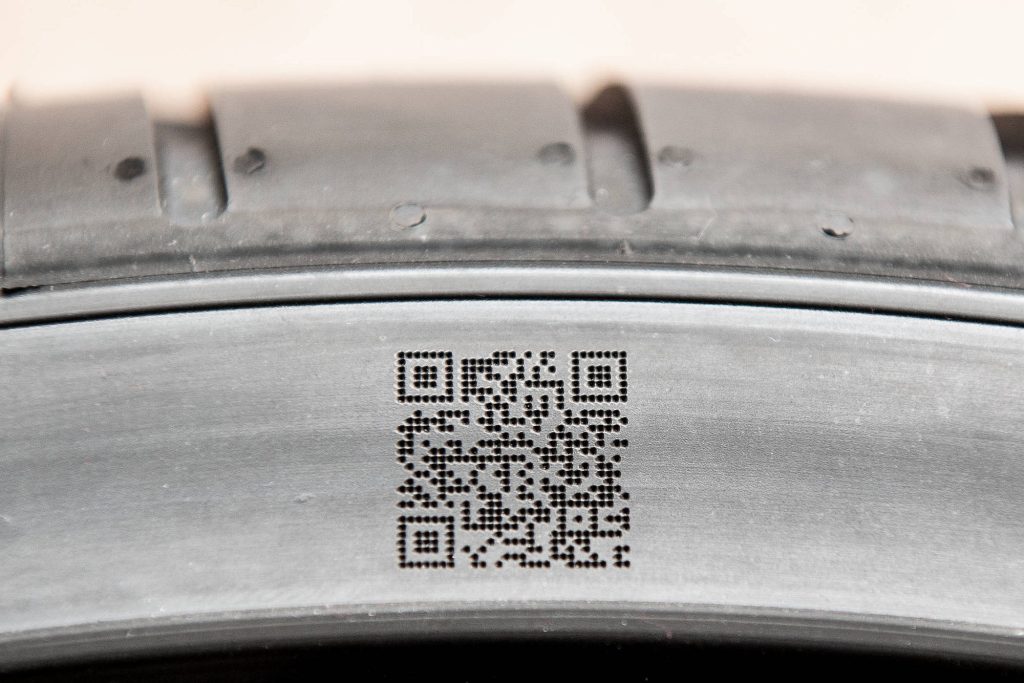
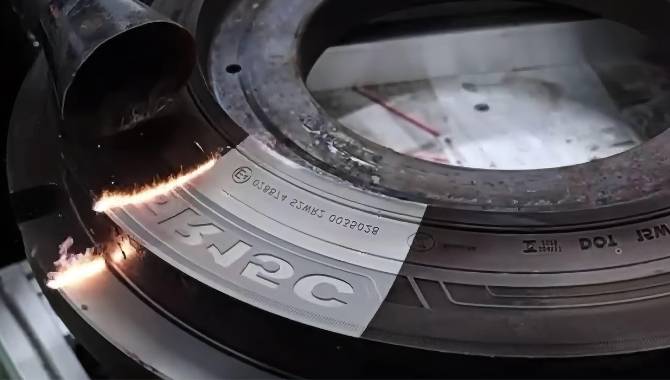
Laser coding technology allows tires to be permanently marked with specifications, production numbers, etc. This not only facilitates product traceability, but also makes it easier to identify the product. This not only facilitates product traceability, but also meets the need for customization. For example, manufacturers can engrave unique markings on tires before they leave the factory, reducing inventory pressure and improving market responsiveness.
4. Laser 3D printing
Laser 3D printing has great potential in tire mold manufacturing. Traditional mold manufacturing process is costly and long cycle time, while laser 3D printing can be flexible and fast production of complex parts. At the same time, laser-printed molds can be adjusted to achieve special features, such as corrosion resistance or breathable structures.
5. Laser cutting
Laser cutting technology demonstrates the advantages of high precision and efficiency in tire cord cutting, quiet material cutting, and mold processing. Compared to conventional cutting methods, laser cutting is free of mechanical stress deformation, ensuring consistent processing quality.
Future prospects for laser technology
In the future, as laser power increases and pulse widths decrease, tire manufacturing applications are set to become more diverse. High-power laser cutting could take over from traditional plasma cutting techniques. Additionally, the use of femtosecond laser "cold processing" is likely to facilitate the creation of micro-nanostructures on tire surfaces, potentially enhancing quiet performance or abrasion resistance. Moreover, combining laser technology with artificial intelligence and the Internet of Things is expected to advance the development of smart tires, ultimately providing more personalized services to users.
Laser technology changes the tire industry by adding unprecedented precision and efficiency to manufacturing processes. It also steers the industry towards green and intelligent directions. As this technology continues to develop, lasers will become an indispensable core power in tire manufacturing, helping the industry leap from traditional processing modes to modern intelligent manufacturing.