

Galvanized sheet refers to a steel sheet with a layer of zinc on the surface. Galvanized steel sheet is coated with a layer of metal zinc on the surface of the steel sheet to prevent corrosion and extend its service life. This zinc-coated steel sheet is called galvanized sheet. Galvanizing is an economical and effective rust prevention method that is often used. About half of the world's zinc production is used for this process.
The zinc coating of galvanized steel not only has a physical shielding effect, but also plays an electrochemical protection role on the steel matrix. Its good corrosion resistance makes galvanized steel widely used in many fields.
However, due to the presence of the zinc coating in galvanized steel, the welding processability of galvanized steel is greatly reduced. In the welding process of galvanized steel, the physical properties of the coating zinc and the base steel are very different. The gasification of the coating zinc will take precedence over the melting of the base steel, so it has a great impact on the quality of the galvanized steel during the welding process.
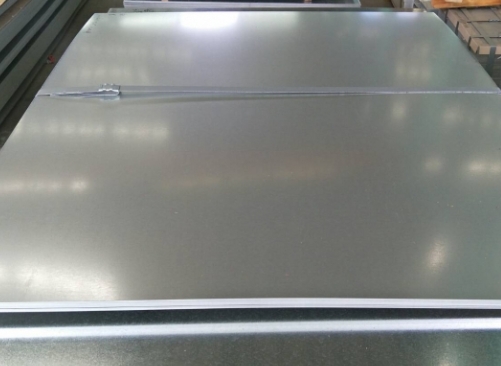
Disadvantages of traditional welding
At present, there are three main welding processes for galvanized steel products: arc welding (SMAW), gas shielded welding and laser welding. Arc welding has low welding efficiency, wide weld heat affected zone, serious zinc layer burnout near the weld, more welding spatter, and poor weld corrosion resistance. Gas shielded welding (MAG) has high welding efficiency, but the weld joint has large deformation, high current density, and the welding wire is easy to penetrate the workpiece; arc brazing has low welding heat input, but the weld joint strength is low.
Advantages of laser welding
Laser welding belongs to high-energy beam welding technology, which has the advantages of high energy density, high welding efficiency, large weld depth-to-width ratio, small heat affected zone and small thermal deformation, and energy saving. It is very suitable for the requirements of precision welding technology. It is also the most studied and most widely used welding method in actual production and processing. Therefore, it has become the best choice for welding galvanized sheet.
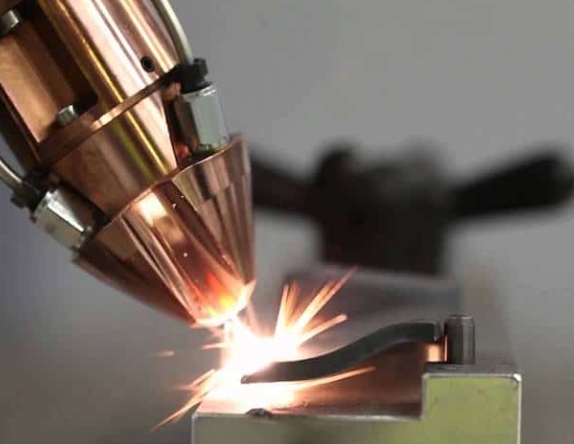
The thickness of galvanized sheet welded by handheld laser welding machine
As the most common laser welding equipment today, handheld laser welding machine is suitable for galvanized sheet with a thickness of less than 3mm. Specifically, for galvanized sheet with a thickness of 1 mm, a power setting of about 600W is usually sufficient to complete the welding task, while for galvanized sheet with a thickness of 2 mm, a power setting of 1200W is more appropriate. For welding sheets of this thickness, a 2000W laser welder is recommended. The Riselaser laser welder has a strong welding capability and can perform single-pass full penetration welding on galvanized steel sheets up to 7 mm thick.
Handheld laser welders can weld galvanized sheets of 1~2mm, or even thicker sheets of 5~6mm, but the equipment power needs to be adjusted according to the actual thickness of the sheet, or a device with appropriate power needs to be selected.


