
Laser cleaning technology has been widely used in the industrial cleaning field. Its popularity is due to its high efficiency, precision, and environmental protection. Different types of lasers, such as CO2 lasers, green lasers, ultraviolet lasers, and fiber lasers, each have unique advantages. These lasers can meet the cleaning needs of various materials and application scenarios. They also promote the rapid development of related technologies.
Laser cleaning uses high-energy laser beams to remove contaminants from surfaces and can be applied to a wide range of materials. CO2 lasers are suitable for metal and carbon fiber cleaning, green lasers are effective on non-metallic surfaces, UV lasers are ideal for fragile materials due to their high precision, and fiber lasers demonstrate excellent performance on metal surfaces. All types of lasers demonstrate efficiency and reliability in different scenarios.
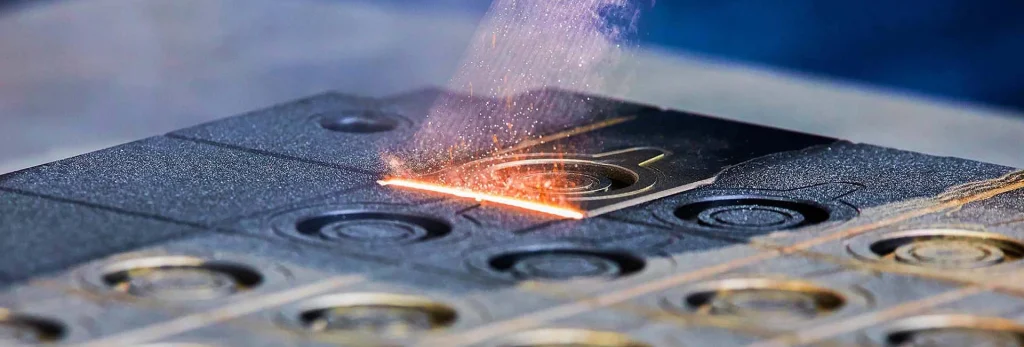
Characterization and Excellence of Different Lasers in Laser Cleaning Technology
CO2 lasers have a wide range of applications in laser cleaning. Their high energy, suitability for a wide range of materials and deep cleaning properties make them ideal tools for industrial and manufacturing applications. In metal surface cleaning, CO2 lasers are effective in removing oxides and coatings and improving the cleanliness of metal surfaces. In addition, it also shows good results in cleaning non-metallic materials such as carbon fiber without damaging the material itself. Various fields, including electronics, automotive, and aerospace, widely use carbon fiber and its composites due to their light weight, high rigidity, ease of processing and molding, excellent impact resistance, and outstanding durability. Because of this, CO2 laser cleaning has shown irreplaceable advantages in the industrial field.
CO2 lasers are highly efficient and precise, especially in cleaning metal surface coatings and non-metallic carbon fiber surface coatings. Its non-contact cleaning process effectively protects the integrity of the substrate material and avoids physical damage. In addition, by optimizing the process for different surface materials and coating thicknesses, the CO2 laser further improves cleaning efficiency and quality.
Green light lasers have advantages over CO2 lasers for cleaning certain non-metallic materials and devices. The moderate wavelength of the green light laser allows for efficient removal of grease, dirt and coating contamination from electronic devices, while having a low thermal impact on the devices, thus preventing them from being damaged. During the cleaning process, the green laser shows good absorption, especially for the removal of dirt and coatings, making the cleaning work more efficient.
The wavelength range of the green laser provides good visibility. This feature makes it easy for the operator to clearly observe the cleaning process, thereby improving the accuracy of the operation. Additionally, the low energy of the green laser reduces the risk of potential damage to the target surface. This makes it particularly suitable for materials with high surface requirements. Its efficient and precise laser beam control provides an ideal tool for microscopic cleaning. At the same time, it ensures that materials on sensitive surfaces remain intact during the cleaning process.
UV lasers are of interest in laser cleaning because of their short wavelength, concentrated energy and high resolution. Unlike other types of lasers, UV lasers are able to directly break the chemical bonds between substances without causing heating of the surrounding area, making them an ideal tool for working with fragile substances.
UV laser cleaning technology has shown remarkable results in a number of areas. For example, it preserves the surface integrity of archaeological bone, enhances the surface quality of paintings, and effectively removes particles from silicon surfaces. UV lasers not only remove contaminants efficiently, but also provide precise control of the cleaned area during the cleaning process, maximizing the protection of the surface integrity of the material. Their broad applicability and unique performance make them outstanding in scenarios where high precision and non-destructive cleaning is required.
Fiber lasers primarily perform cleaning tasks in the 1,060 nm to 1,080 nm band. Their high power output and energy density make them especially effective for cleaning metal surfaces. They efficiently and reliably treat large areas of metal or stubborn contamination, handling cleaning tasks that require continuous operation over long periods. Additionally, fiber lasers excel in cleaning complex shapes or hard-to-reach areas due to their flexibility, precise control, and low energy consumption. They also enable users to precisely treat various materials and contamination levels.
Fiber lasers have demonstrated excellent performance in the cleaning of metallic materials. For example, the cleaning process is not only efficient, but also maintains the integrity of the material surface. Fiber laser cleaning improves the material's microhardness and reduces its oxygen content, thereby enhancing corrosion resistance. Users can further enhance cleaning efficiency and optimize results by adjusting the laser parameters. The fiber laser is able to maximize the quality and integrity of the material surface while efficiently removing contaminants.

Summarize
Laser cleaning technology has become an important tool in industry and manufacturing. This is due to its high efficiency, precision, and non-contact nature. CO2 lasers offer high energy and are applicable to multiple materials. Green lasers are particularly advantageous for heat-sensitive, non-metallic cleaning. UV lasers provide high resolution and non-destructive performance. Fiber lasers stand out for their flexibility and durability in metal surface cleaning. Each type of laser demonstrates unique advantages in different application scenarios.
CO2 lasers play an important role in cleaning metal and carbon fiber. Green lasers handle delicate and heat-sensitive cleaning tasks more effectively. UV lasers protect fragile materials during cleaning, earning them widespread favor. Fiber lasers tackle complex shapes and stubborn contamination with remarkable efficiency and flexibility.
Selecting the right laser for each material and need allows users to accomplish cleaning tasks more efficiently. At the same time, it protects the integrity of the substrate material. With the continuous optimization and development of the technology, laser cleaning will play a more important role in various fields. It will provide a more environmentally friendly and reliable solution for industrial cleaning.


