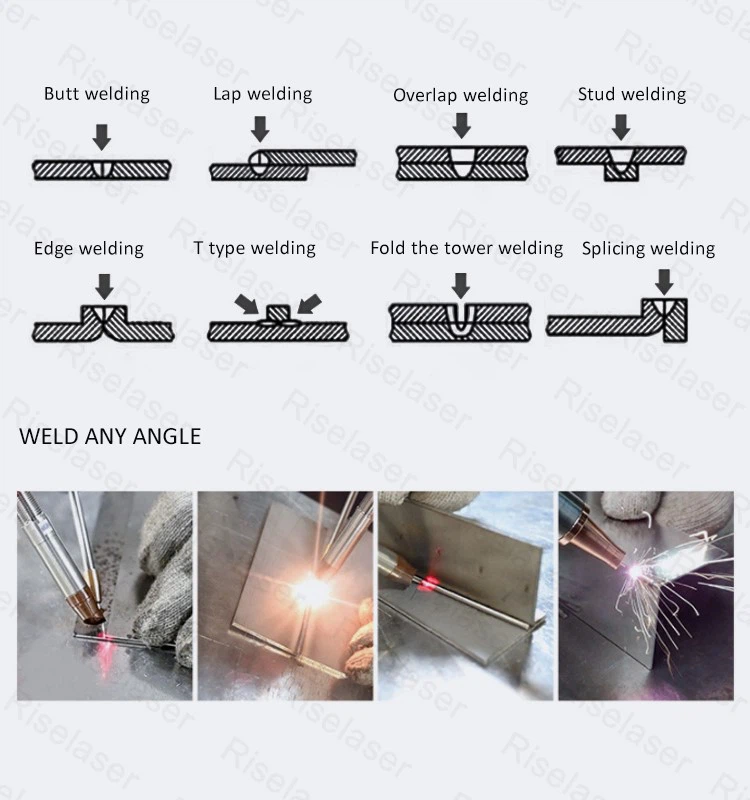
For laser welding machine, it is generally believed that the welding depth is basically linearly related to the laser power. The beam mode determines the energy distribution of the focus and has an important impact on laser processing.
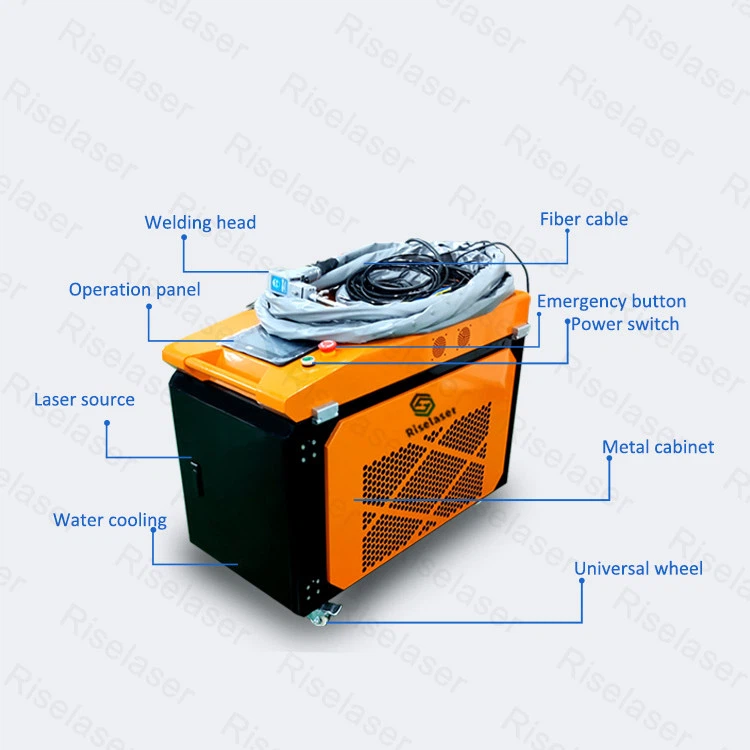
These are the energy characteristics of the laser beam of a laser welding machine. In addition, the laser welding machine does not require the use of electrodes, and there are no concerns about electrode contamination or damage. The beam mode determines the energy distribution of the focus and has an important impact on laser processing.
When the laser beam is the base mode, the maximum weld depth to depth to width ratio can be obtained. The higher the order of the beam mode, the more divergent the energy distribution of the laser beam, and the poorer the welding quality. The effect of laser beams with different beam focusing characteristic parameter values K on the quality of laser welding. The higher the beam K value, the poorer the quality, and the smaller the depth to width ratio of the weld. In laser welding, the main role is played by the laser power density value. This is because different materials have a critical power density threshold value. Only when the power density value of the laser focus exceeds this threshold value can a "small hole effect" be formed to achieve deep penetration welding.

The energy characteristics of a laser beam include the power and power density of the beam, continuous/pulsed output, and polarization of the laser beam. Due to the non contact welding process, the wear and deformation of the machine can be minimized. The energy characteristics of the laser beam of a laser welding machine mainly include the wavelength, power, and power density of the laser beam.
The relationship between the quality of laser welding machine equipment and the characteristics of beam modes, including the beam quality, beam mode, and the energy distribution across the beam cross-section. The power density of the material forming the pores is not only related to the uniform power density, but mainly depends on the maximum power density, which is closely related to the cross sectional energy distribution.