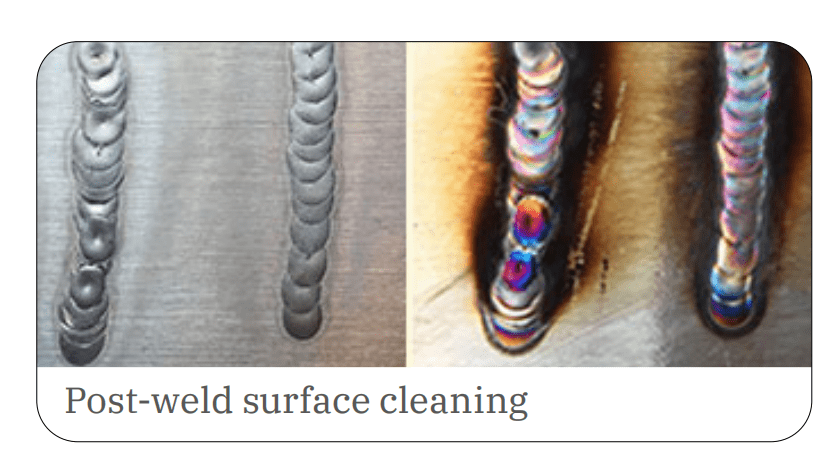
Weld surface cleaning is one of the classic applications of industrial laser cleaning, widely used in fields such as automotive, shipbuilding, and precision tool manufacturing. It can clean materials such as steel, stainless steel, aluminum, and iron without damaging the base material or affecting the welding effect of the product. In addition to metal cleaning applications, laser cleaning machines can also remove oxide layers, primers, oils, and hydrates.
Advantages of laser cleaning welds include:
- Damage-free cleaning: Laser cleaning is a non-contact process that avoids direct contact with the weld surface, preventing damage or deformation of the workpiece.
- Precise focused cleaning: Laser technology allows precise control of the cleaning area and depth, suitable for various complex weld shapes.
- Environmentally friendly: Laser cleaning does not require chemical solvents or cleaning agents, thus avoiding the generation of toxic waste and meeting environmental standards.
- Effective cleaning: High-energy lasers can thoroughly remove oxides, welding slag, and other contaminants produced during the welding process, ensuring a clean weld surface.
- Reduced maintenance costs: Compared to traditional methods, laser cleaning saves manpower and material costs over the long term, making it cost-effective.
Laser cleaning plays a unique auxiliary role in the field of industrial welding. Laser cleaning machines can remove lubricants, ferrous and non-ferrous metals from metal, assisting laser welding machines in achieving smooth, non-porous high-quality welds, and effectively enhancing the stability and appearance quality of the welds.
Pre-welding pretreatment:
- Before welding, laser cleaning of debris, dirt, oil stains, or other pollutants on the material ensures the cleanliness and quality of the welding surface, thereby improving the strength and sealing of the welded joint, avoiding welding defects, and enhancing welding efficiency and quality. Post-weld cleaning:
- Typically, after welding, gray-black or yellow oxides or welding slag remain in the weld. To avoid affecting the product's performance and appearance and reduce subsequent surface treatment processes, it is necessary to clean the welds to ensure their quality, strength, and save production costs and time. Cleaning of old workpiece weld beads:
- After welding, welds may develop rust marks due to exposure to time, sun, rain, and other external factors, affecting performance and appearance. Laser cleaning can timely remove rust and continue to effectively maintain the functionality of products and structural components.
In recent years, Riselaser has focused on customer processing requirements and produced a variety of machines that meet European standards, including portable handheld laser cleaning machines and high-power pulse laser cleaning machines. As industries continue to prioritize environmental sustainability and cost-effectiveness, laser cleaning stands out as a forward-looking and environmentally friendly solution.
For more detailed information about weld bead laser cleaning machines, please feel free to contact us anytime.