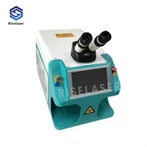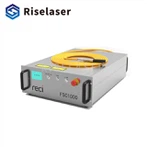
Laser is a high-tech product with a wide range of applications, including military industry, aerospace, medicine, industry, communication, and other fields. However, during long-term use, lasers may experience various malfunctions that require maintenance and repair. This article will introduce the maintenance issues of lasers from the following aspects.

Common typical fault problems
1.Problem of laser beam deviation
Beam deviation is usually caused by the poor condition of the lens components, which cannot maintain appropriate pattern matching and positioning, resulting in a decrease in transmission power. During maintenance, it is necessary to check whether the light source, beam divergence controller, and mirror surface are damaged or loose.
2.Laser cooling issues
The laser generates a large amount of heat during use and requires cooling to prevent component damage. If the cooling system malfunctions, the laser will overheat and stop working. Cooling system problems include insufficient pump water flow, high pump temperature, and problems with the water cooling pipeline or circulation water circuit in the water cooler.
3.Output power reduction issue
The decrease in output power is usually caused by contamination of the optical components and cavity surfaces, dust accumulation in the lens and windows, or possibly damage to the laser medium. Cleaning optical components, especially mirrors and output rods, usually restores power.
4.Laser external auxiliary equipment malfunction issue
The operation of laser equipment requires external conditions such as electricity, water, gas, drying, dust removal, and temperature. If external conditions are not met, normal use may not be possible, shortening the lifespan of the laser.

Simple maintenance methods for encountering the above problems
1.Clean
Maintaining the cleanliness of the laser is an important measure to prevent malfunctions. Before cleaning, it is necessary to disconnect the power supply and wait for the ambient temperature to recover. Cleaning includes wiping the surface of optical components to remove dust and stains, especially the reflector and output rod. Use a clean cotton cloth and cleaning agent for cleaning, taking care not to wet other parts.
2.Replace components
If parts are damaged or their lifespan expires, replacement work is required. Before replacement, it is necessary to ensure that the spare parts are the same or have similar performance as the equipment. When replacing components, it is necessary to first disconnect the power supply and assemble them in the correct order.
3.Checking circuit
When the laser cannot function properly, its circuit needs to be checked. Before inspection, it is necessary to first confirm the safety measures and disconnect the power supply. The inspection process includes checking the circuit board and cables for short circuits, looseness, or other faults, as well as whether consumable components need to be replaced. If the fault point cannot be determined, the problem can be identified by measuring various parts of the circuit.
4.Check the cold system
If the laser cannot maintain temperature or does not undergo cooling, there may be a problem with the cooling system. The inspection process mainly includes checking the status of water flow rate, temperature sensor, and cooling pump. Before checking, the power supply must be disconnected first.