

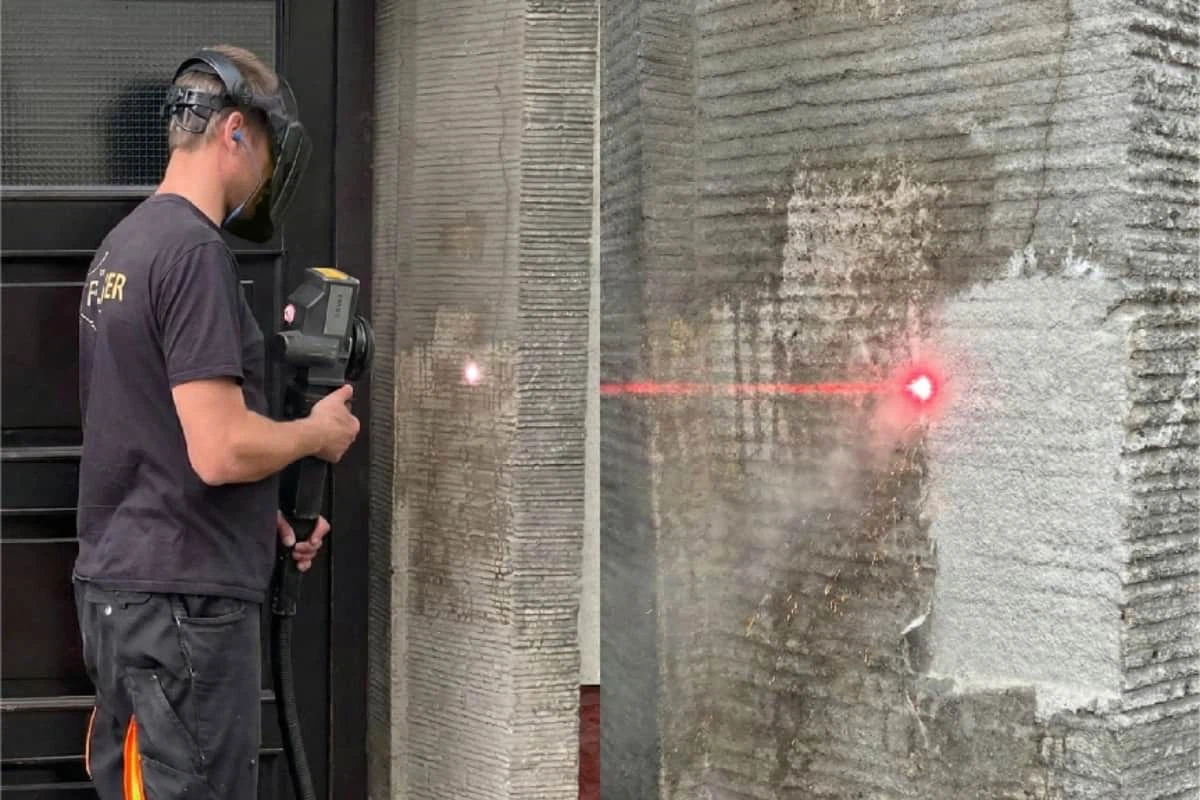
Historical masonry and aging infrastructure face a common enemy: traditional cleaning methods. Abrasive blasting often erodes delicate architectural details, while chemical stripping leaves toxic residues in porous stone. Laser cleaning for building renovation offers a non-contact, media-free alternative that vaporizes contaminants-such as soot, biological growth, and laser lead paint removal-without damaging the substrate. For property managers and restoration specialists, this technology reduces liability, eliminates consumable costs, and preserves the integrity of high-value assets.
Technical Foundations: The Physics of Preservation
Laser cleaning relies on selective ablation. By tuning the laser's wavelength and power, the beam vaporizes dark-colored contaminants (soot, carbon, paint) while reflecting off light-colored substrates (limestone, marble). This "energy window" ensures that once the contaminant is gone, the beam no longer interacts with the surface, preventing over-cleaning.
Pulsed vs. Continuous Wave (CW) Lasers
Choosing the right source is critical for historical stone restoration and structural safety:
Pulsed Lasers (MOPA/Q-Switched): The "Gold Standard" for renovation. These deliver high-peak power in short bursts (nanoseconds), minimizing the Heat-Affected Zone (HAZ). This prevents thermal cracking in brittle masonry.
Continuous Wave (CW) Lasers: High-speed systems designed for bulk industrial rust removal. While faster, they carry a higher risk of overheating delicate building materials and are generally avoided for fine stonework.
Expert Note: Use "Wobble" or "Infinity" scanning patterns. These movements ensure the beam doesn't dwell on one spot, providing a uniform finish and preventing the "striping" effect common in low-end machines.
Material-Specific Protocols & Case Studies
Building remediation requires specific parameters based on the material's porosity and chemical makeup.
1. Historical Stone & Masonry
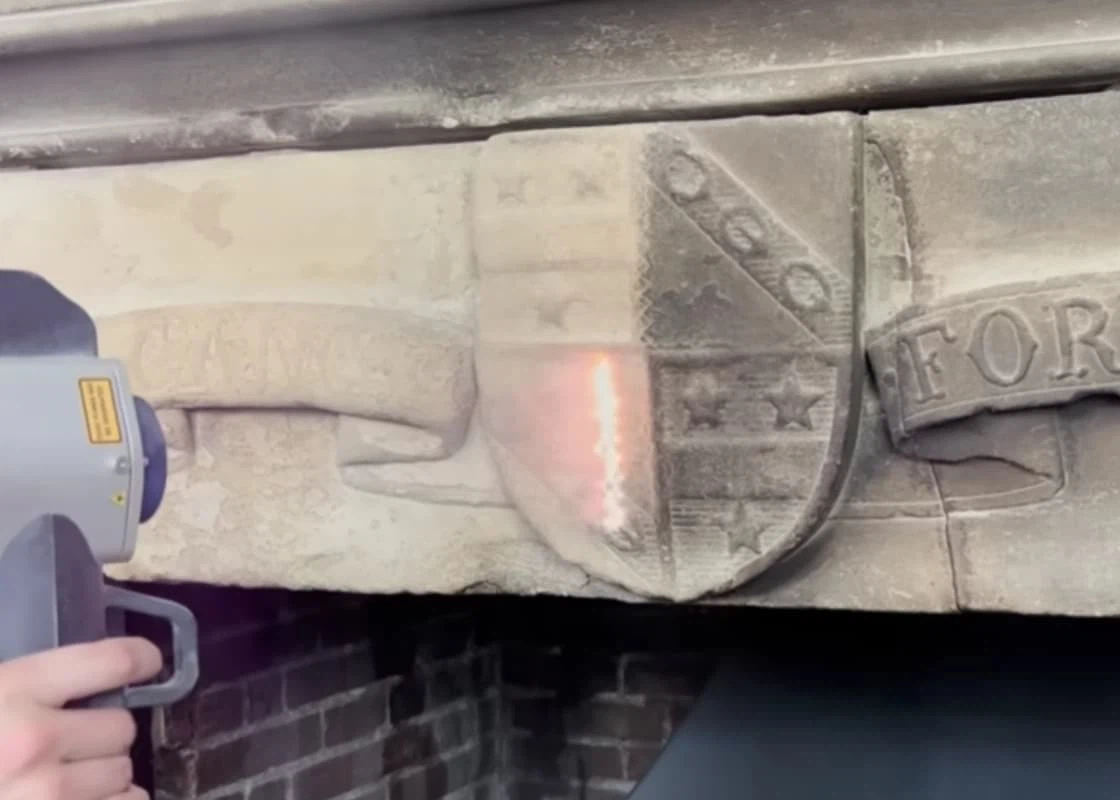
Limestone & Sandstone: Laser cleaning effectively removes sulfate crusts and "black scabs" caused by urban pollution. This technology was famously used for post-fire soot remediation at Notre Dame and the Amiens Cathedral.
Biological Remediation: Lasers vaporize algae, lichens, and Ulocladium sp. spores. Unlike pressure washing, the laser sterilizes the surface, significantly slowing regrowth.
2. Building Facade Remediation (Lead Paint)
Removing lead-based paint is a primary challenge in building facade remediation. Laser ablation is a "dry" process, meaning it does not create contaminated wastewater. When paired with high-efficiency fume extraction, it meets EPA Lead RRP rules by capturing lead particulates at the source.
3. Metal & Infrastructure
Preparing ASTM A36 structural steel for new coatings is streamlined with lasers. It achieves an ISO 8501-1 Sa 2.5 cleanliness level, providing an ideal surface profile for superior coating adhesion without the mess of grit blasting.
High-Risk Warnings: Prohibited Materials
Safety and structural integrity are paramount. Certain materials should never be cleaned with a laser due to toxic byproduct release:
PVC/Vinyl: Releases corrosive chlorine gas.
Polycarbonate/ABS: Produces toxic soot and hydrogen cyanide fumes.
Fiberglass: Releases airborne glass particles and toxic resins.
The Economics: Pulsed Laser Machine Cost & ROI
While the initial investment is higher than a pressure washer, the Total Cost of Ownership (TCO) is lower due to the absence of consumables (sand, chemicals, water) and reduced waste disposal fees.
2026 Pulsed Laser Machine Pricing Reference
| Power Output | Starting Price Range (USD) | Common Laser Sources | Primary Use Case |
| 100W Pulsed | $2,000 – $9,600 | JPT, Raycus, IPG | Light detailing, backpack use |
| 300W Pulsed | $3,800 – $19,300 | JPT, Maxphotonics | Contractor "Sweet Spot" |
| 500W Pulsed | $4,500 – $27,300 | IPG, JPT (High Pro) | Industrial facade remediation |
| 1000W+ Pulsed | $21,700 – $65,000+ | IPG LightWELD, P-Laser | High-speed paint stripping |
Coverage Rates: A 1000W system can achieve light rust removal at 20 m²/h or paint stripping at 10–15 m²/h.
Service Hire Rates: Professional contractors typically bill $250–$350 per hour plus mobilization fees.
Safety, Regulations, and Green Incentives
Regulatory Compliance
Operating a laser on a job site requires adherence to OSHA 29 CFR 1910/1926 standards.
Laser Safety Officer (LSO): A designated person must oversee the "Controlled Area."
PPE: Operators must wear wavelength-specific safety glasses (OD 7+ for 1064nm).
Fume Extraction: A HEPA-filtered system is non-negotiable for capturing ablated particulates.
Financial Incentives
Section 179: Allows businesses to deduct the full purchase price of the equipment in the year of purchase.
Section 179D/45L: Federal tax credits are often available for energy-efficient building upgrades where laser cleaning is used to restore rather than replace components.