



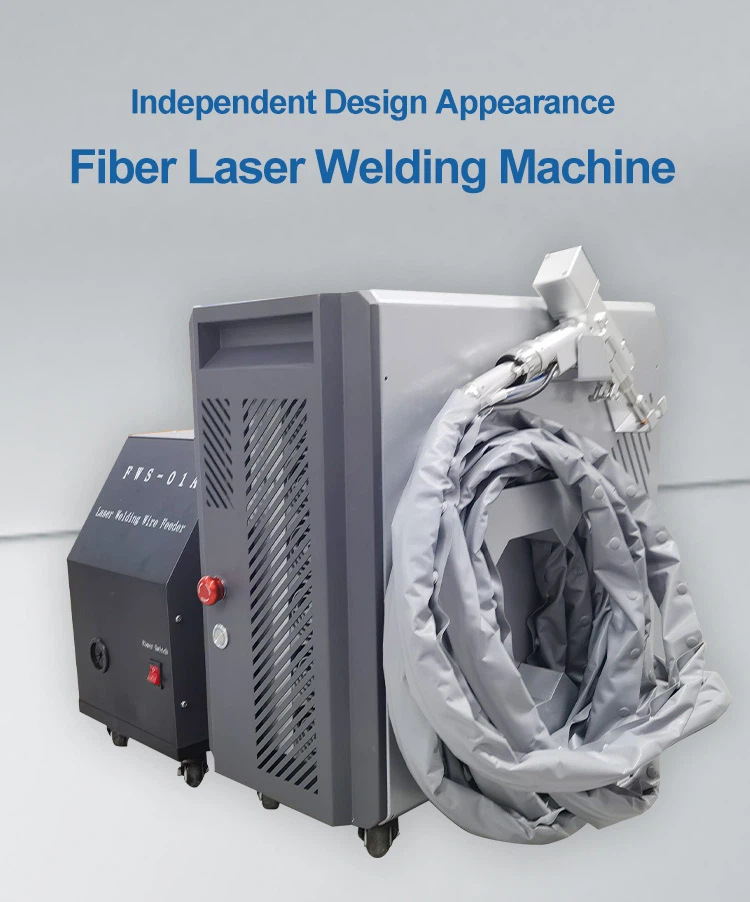
Laser welding is a very efficient and precise welding method, and the laser beam can be welded in a very short time, and can achieve high quality welded joints. However, in practical applications, sometimes it is necessary to increase the welding speed to meet production needs or improve production efficiency. Here are some ways to increase the speed of laser welding.
1. Improve laser power:
The welding speed and power of the laser welding machine are proportional to each other, and increasing the laser power can achieve higher welding speed. The power output of the laser can be adjusted to meet the requirements of welding speed. Of course, it should be noted that increasing the power may increase the heat input during the welding process, and reasonable control of the heat-affected area of the welding material is required.
2. Reduce weld diameter:
The smaller the diameter of the welding point, the greater the power density of laser welding, and the faster the welding speed. By reducing the diameter of the welding point, the welding speed can be increased. Of course, it should be noted that too small welding point diameter may increase the difficulty of welding alignment, the need for proper balance.
3. Optimize welding parameters:
The selection of welding parameters has a great influence on the welding speed. The welding effect and speed can be obtained by optimizing the parameters such as laser power, laser beam diameter, welding speed, and focal length. Different welding parameters can be set according to the requirements of different welding materials and welding parts.
4. Improve the quality of lenses and beams:
The lens and beam quality of the laser welding machine also have an impact on the welding speed. If there is a problem with the lens or beam, it may cause energy loss or scattering, which can affect the welding speed. Therefore, regular inspection and maintenance of the optical system to ensure the quality of the beam can improve the welding speed.
5. Use appropriate welding materials:
The welding speed is also affected by the welding material. Some materials may be easier for laser welding, while others may require higher power to achieve the same welding speed. According to the welding requirements, the selection of appropriate welding materials can improve the welding speed.
6. Use of collaborative robot technology:
Collaborative robotics technology can combine laser welding machines with robotic systems to achieve greater speed and accuracy in the welding process. Through the collaborative robot, the welding task can be divided into multiple sub-tasks and processed in parallel, thus improving the welding speed.
7. Prepare ahead of time:
Proper preparation before welding can improve welding speed. For example, cleaning the welding surface to ensure that the surface is free of dirt or oxides provides better welding conditions. In addition, the welding material can be cut to the appropriate shape and size in advance to reduce welding time.
In summary, the key to improve the speed of laser welding is to increase the laser power, reduce the diameter of the welding point, optimize the welding parameters, improve the quality of the lens and the beam, use the appropriate welding materials, use collaborative robot technology and prepare in advance. Through reasonable application of these methods, the speed of laser welding can be improved to meet different production needs and improve production efficiency.


