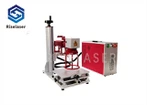
Laser welding machine, also known as laser welding machine and laser welding machine, is a machine for laser material processing. According to its working mode, it can be divided into automatic laser welding machine, laser spot welding machine and optical fiber laser welding machine. Its principle is to use the laser pulse emitted by the laser welding machine with high energy to locally heat the material in a small area. Through the internal diffusion of the heat transfer guide material, the material will be melted to form a specific molten pool to achieve the purpose of welding.
The laser welding machine is different from the traditional welding machine. The traditional welding method, because of the huge heat input, will inevitably lead to problems such as distortion and deformation of the workpiece. The laser welding has low noise, high efficiency, no smoke and no dust, which can realize the heat conduction welding with beautiful welds, and can also realize the deep penetration welding with high welding strength and high welding speed. Just like the appearance parts of elevators, kitchenware and automobile equipment, they need very beautiful, smooth and deformation free welding effects. The application of laser welding in sheet metal manufacturing is more and more common.

In addition, the laser welding machine determines the welding speed and welding depth and width according to personal needs, which can greatly improve the welding efficiency and stability. The laser welding machine is more and more widely used in the modern industry. In order to reduce the distortion of the workpiece, a large number of follow-up processing methods are required, thus increasing the cost.

In modern sheet metal manufacturing, the requirements for welding strength and appearance effect are different according to different products. Laser welding has small heat input and very small heat affected zone, which can effectively improve the quality of welding products and reduce the time for follow-up work. Some internal structural parts or parts to be sprayed subsequently have higher requirements on welding strength and welding speed. Especially for parts with high added value and high requirements for welding quality, it is required to complete in a way that requires no or very little subsequent processing.